PARENTING (Books!)
Greetings from my spot here on this Wednesday afternoon, to wherever you are as you read this!
My children are growing up- quickly. We have one high schooler and one soon-to-be, who is currently in the throes of studying for the high school entrance exam here in Chicago (the admissions process for selective enrollment high schools here in Chicago is, well… I don’t even know which adjective to select here to describe it. It’s extra special. I am saying this with sarcasm, if you didn’t pick up on that!).
Over the years I have read several parenting books and listened to oodles of podcast episodes. During those pandemic years, and any time I felt like I needed more of a parenting village, I have turned to resources for support. At the end of the day, we all are the best experts on our kids, but, let’s face it, the shadows of our past, the obligations of our present, and the stressors that kids experience today that we never encountered during our own childhoods…it’s a lot. And it all easily gets jumbled up in our own moments of dysregulation.
I realized early on how our kids serve as a mirror to ourselves in terms of what we each need to process from our past. This lesson has probably been the most profound experiences of my own adulthood, and I mean that. In the early months of the pandemic, a group of parenting experts created an online webinar series called Parenting In Place (check it out for a list of all the amazing people who participated- Debbie Reber, Ned Johnson, Christine Carter, Julie Lythcott-Haims, Janine Halloran, Jessica Lahey), and I found it to be one of the most connecting parenting experiences, in a time when we REALLY needed them. I turned my focus on the needs of my children in a way that felt reactive for the time period, yet proactive for where our kids were developmentally. That was really what got me started on exploring so many of these resources and considering my children’s mental health, and, in turn, my own. Therapy, parent support groups, chats with mom friends, and conversations with experts who are also parents experiencing their own moments of vulnerability during this journey– I’ve reached for all of it.
And the amazing thing, now that my kids are 13 and almost 16, is that I don’t really NEED to read books or listen to many podcasts any more in support of my parenting. I absorbed so much during these peak transition years, and I hold on to these ways of being as a parent in my interactions with my kids. Even my health coaching training helped (but I have to look out- one of my kids can sniff out an inauthentic reflection in a FLASH– they know when someone is not taking them seriously, and it almost always backfires on me. It is better for me to remove and get myself in a more regulated place than to stand there and BS a response, always.).
Now most of the books and podcasts I consume are for ME! But since I have learned so much, I thought I would highlight my favorite parenting books from over the years:
The Gift of Failure by Jessica Lahey
This is the earliest book out of this collection, and boy has it stuck with me during all the years since. Similar to Brene Brown’s lessons on vulnerability, Jess Lahey’s book on allowing your children to fail supports you through the discomfort of sitting back and watching your children deal with their own discomfort. Talking to teachers about how to boost a poor grade, learning that forgotten homework isn’t the end of the world, and figuring out what to do when your cell phone battery dies or your school shirt is still in the dirty laundry hamper– these lessons can be hard. Part of growing up is learning to figure things out, and we parents don’t need to handhold through every second of it. I read this book when my two were very young, and it left a deep imprint within me. I don’t go rushing to check my kids’ grades online. I don’t even have a log-in to Google classroom (was I supposed to do that? Oh well…). In what world were parents meant to oversee all of this? This book is the guidance we all need in this modern world where society consistently asks parents to do the work so that their kids don’t learn these lessons themselves.
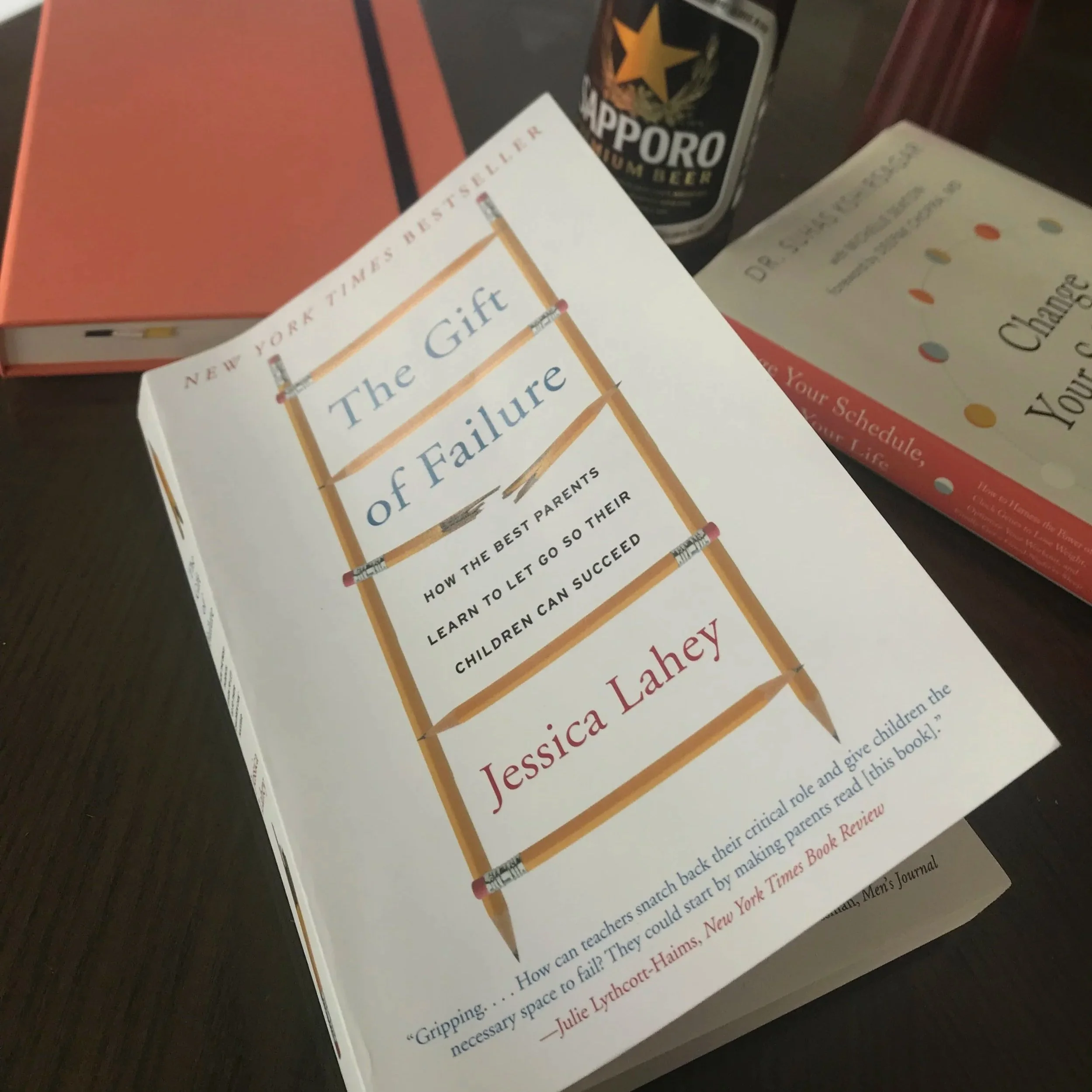
I took this picture in August, 2019 (as my kids were entering the third and first grades, and right before the pandemic year!)
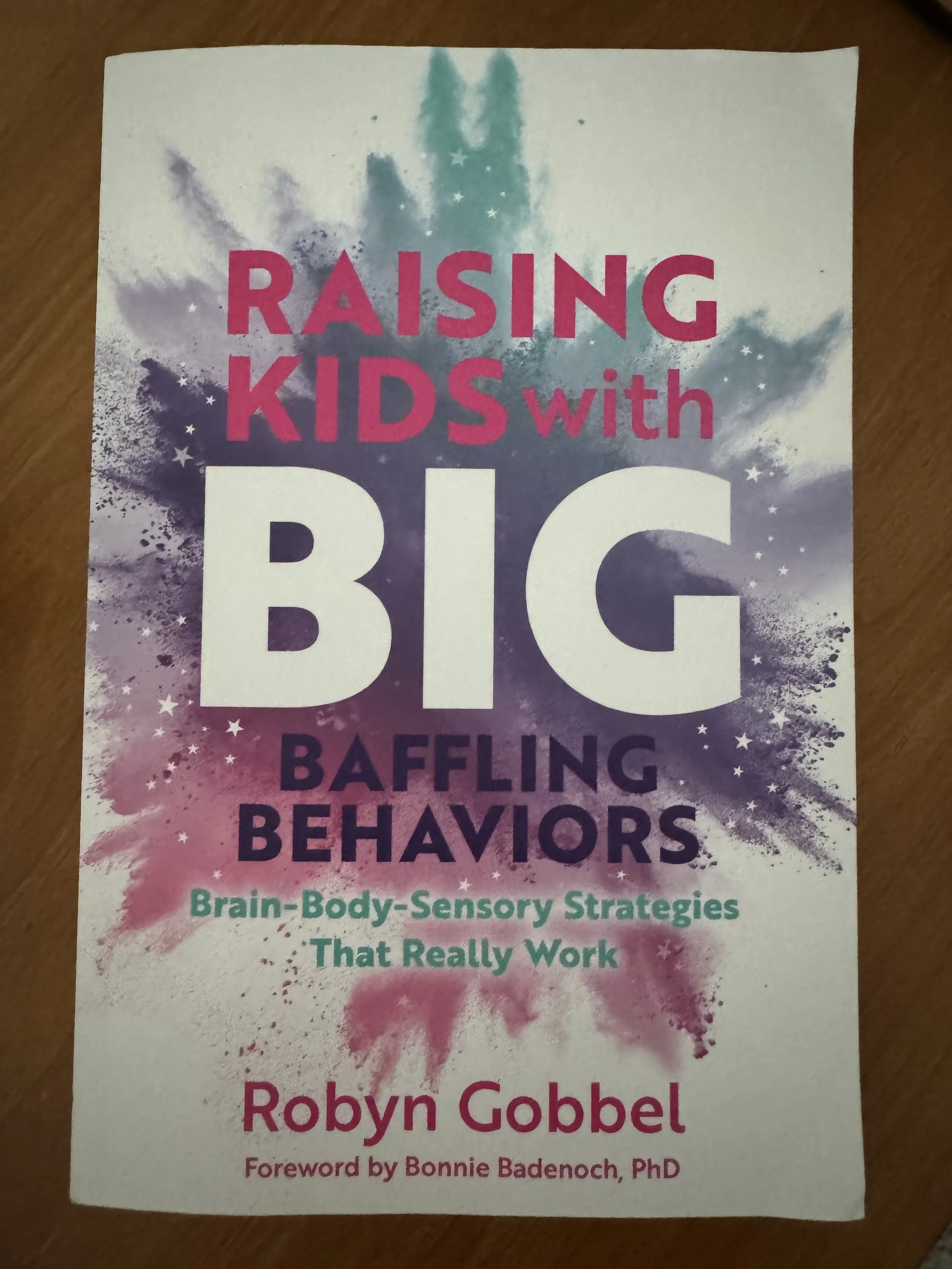
Raising Kids with Big, Baffling Behaviors by Robyn Gobbel
Oh gosh. This book was recommended to me shortly after it was published, at a time when I had a kid with big feelings and felt so overwhelmed by it all. Raising Kids with Big, Baffling Behaviors is rooted in polyvagal theory and focuses on how to find connection and felt safety for yourself, so you can better be available to coregulate with your children. The beautiful thing about this book is that it is written for US, parents, in a way that felt so supportive that I was often moved to tears as I was reading it. Gobbel goes through each chapter with a scenario of a parent coming to her with their child, but what got me over and over was that she writes those sections in the second person.
“When I say something you don’t want to hear, you give me your trademark raised eyebrows with a smirk, and we both laugh. You’ve shown me your rage over your daughter’s behaviors, and the hopelessness you sometimes feel. You’ve sobbed that you can’t see how this can every get better.
Yet you keep coming back.”
Parenting can feel so lonely at times, and yes, even hopeless. We don’t tend to share the hard parts with others, especially difficult moments involving our own children, out of respect for their privacy. This book reached out to me with tenderness and compassion at times when I really needed it.
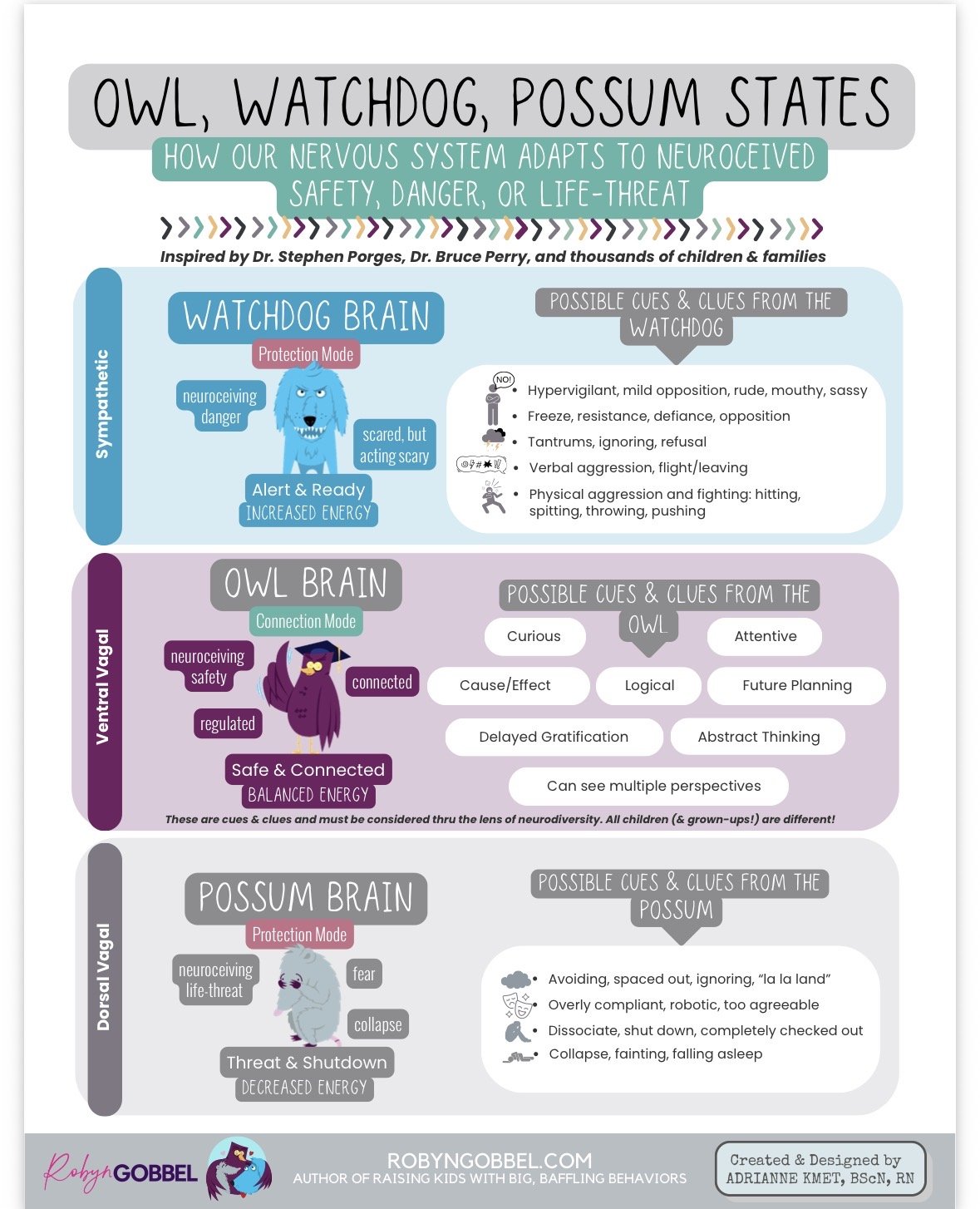
Almost every day I write down my goals for the day: Connection, Regulation, and Felt Safety, and to get there each day, I need: connection, playfulness, self-compassion, and to notice the good. These are all guide rails that I got from this book, and I consciously set up my day by writing them down, two years after reading it for the first time. Gobbel also has many resources on her website, including infographics on our different brain states- owl brain, watchdog brain, and possum brain, that are kid-friendly.
The Emotional Lives of Teenagers by Lisa Damour
The first half of this book is focused on societal gender rules and identity that I found to be helpful considerations when thinking not just of my own kids, but their peers as well. Dr. Damour has a good podcast called Ask Lisa: Untangling Family Life which I turn to fairly often (I’ve even searched the podcast for specific terms to find support for what is presenting for us here at home). She was also consulted for the Inside Out 2 movie, when Riley becomes a teenager, which is pretty cool :) Here is a snippet from this book that shows how it reads. I dog-eared this page back when I read it, as this is indeed a good reminder:
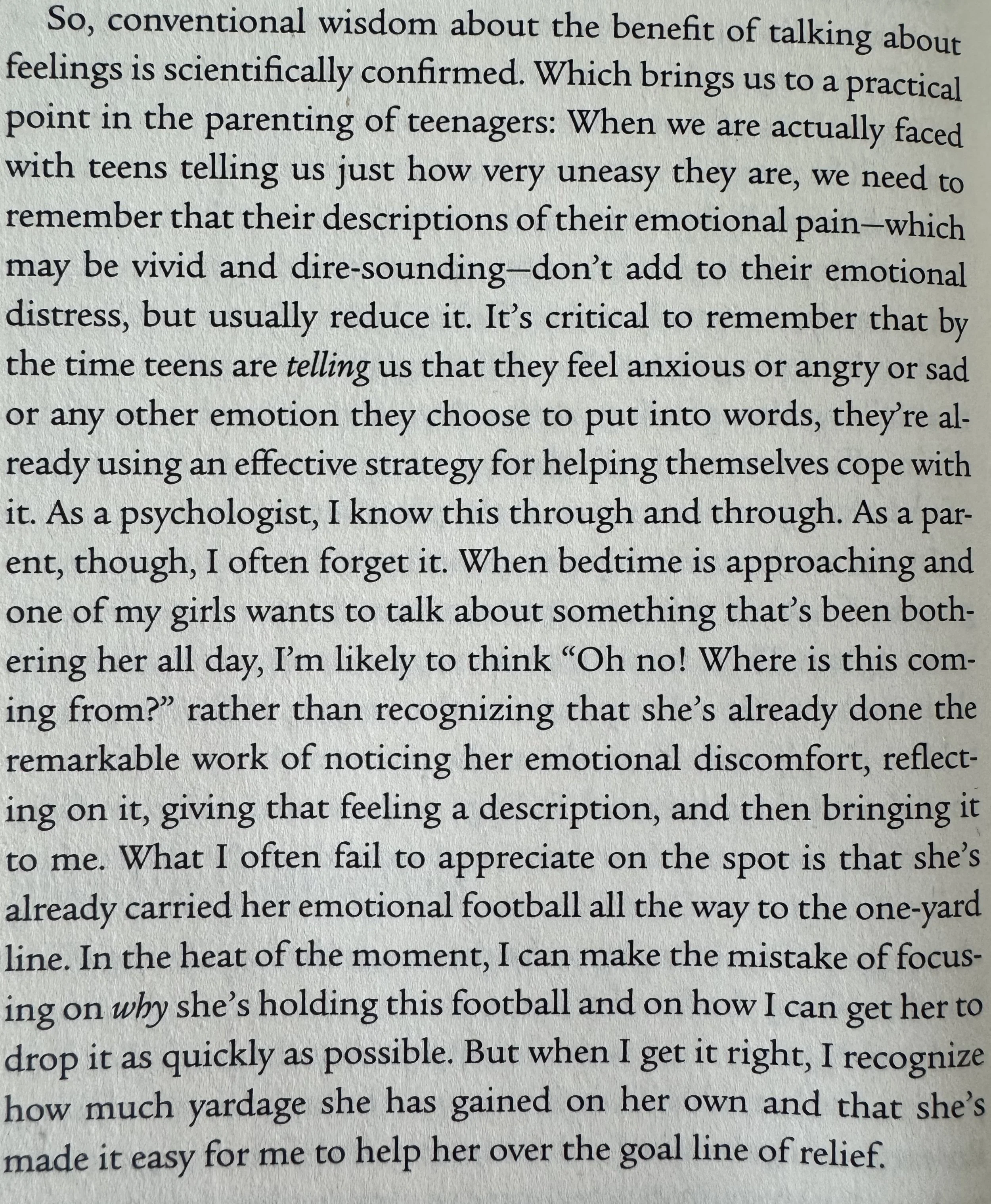
-p. 116, chapter 4 of The Emotional Lives of Teenagers: Managing Emotions, Part One: Helping Teens Express Their Feelings
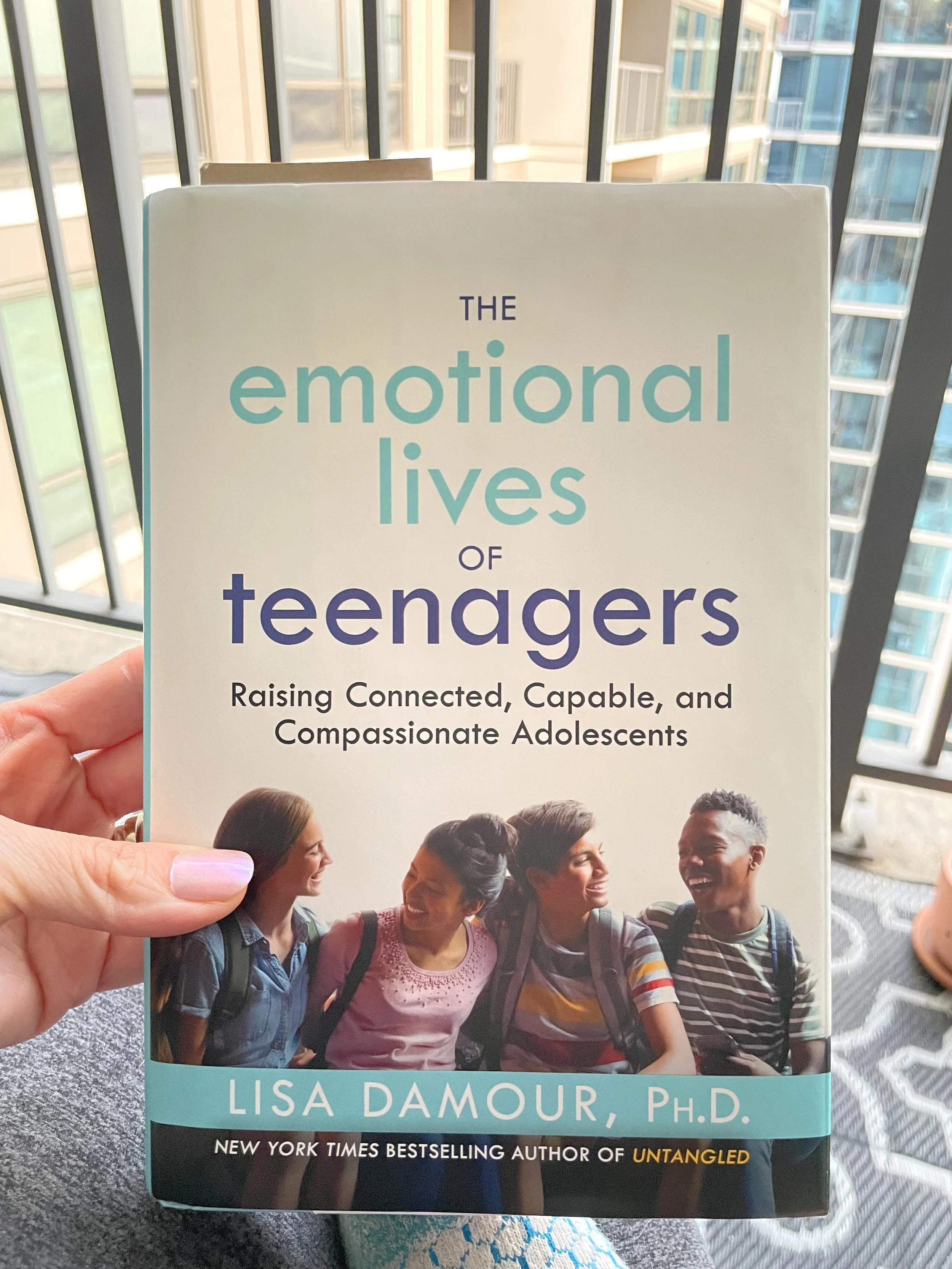
From June, 2023
Love The Teen You Have by Ann-Louise Lockhart
What is cool about this one is that I have been in Dr. Lockhart’s parenting group for a couple years now, and it was exciting to finally get to read her book! I have appreciated Dr. Lockhart for her vulnerability and transparency about her own parenting journey, and the concept of this book is really beautiful. It’s what parenting is REALLY all about– connecting with the kid who is right in front of you, and loving them in their wholeness. You were looking forward to having a kid who is into sports like you were, but they show no interest? Guess what? You have a kid who isn’t into sports. Like Raising Kids with Big, Baffling Behaviors, Dr. Lockhart focuses on our own past and how it shows up for us as parents. I particularly loved the chapters on letting go of perfection, and on how to reparent ourselves. She brings up reparenting considerations that I haven’t heard anywhere else, especially for those of us who have always been hyper-independent, and it made so much sense to me (she calls it collaborative reparenting). Her book also includes tools to help with the needs of teenagers, including scripts, and the end of each chapter contains reflections and activity prompts.
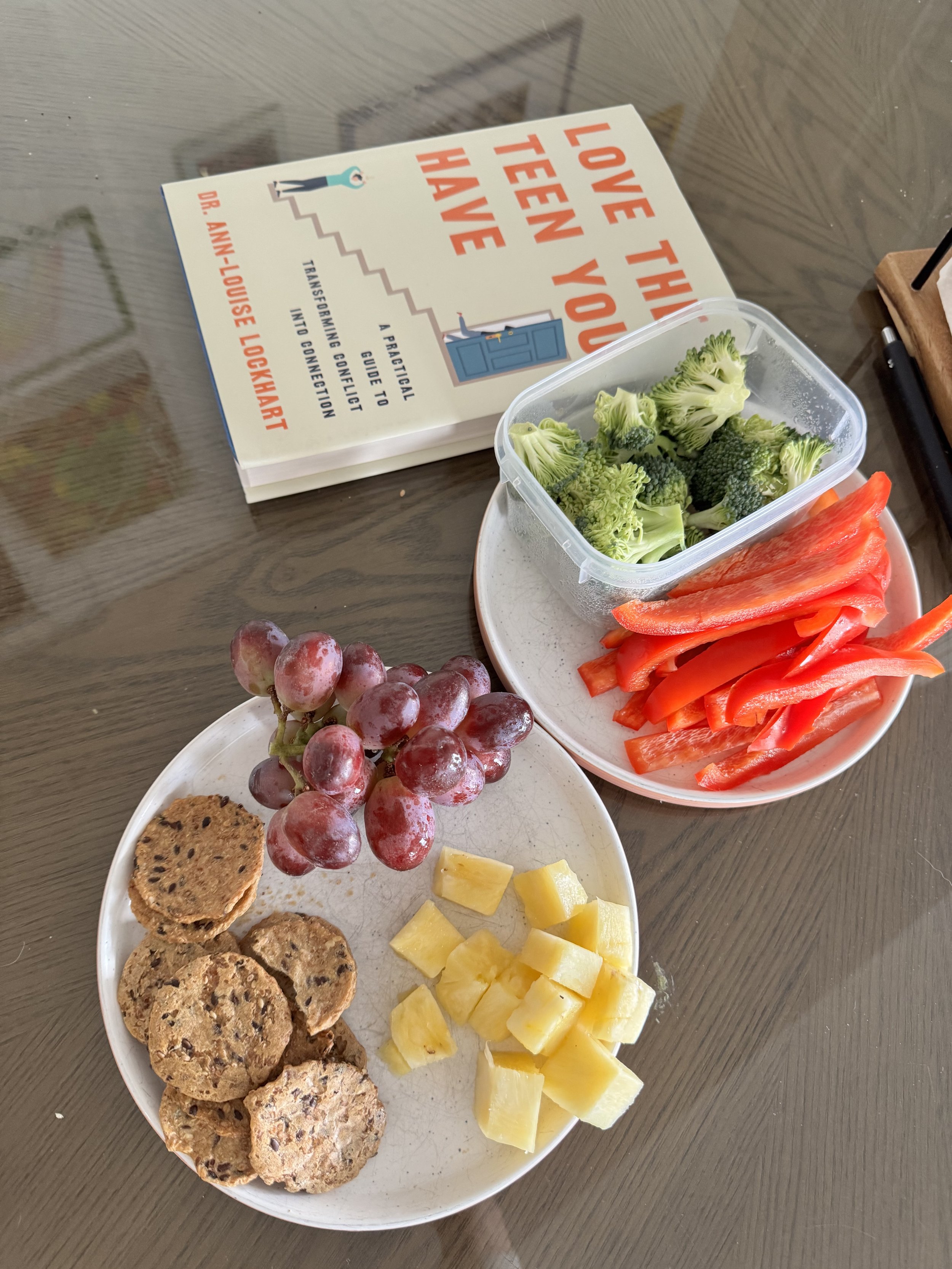
Why did I take a picture of this book next to two plates of snacks back when I read it in February of this year? No idea. But those Mary’s Gone Crackers do look good, don’t they?
Thank you for hanging in there with me through to the end! I mentioned it above but I’ll wrap up here by saying it again. You know your kid best, you know your home best, you know your community best. As you take in parenting support, especially if someone is offering you advice, keep that in mind. Trust yourself, and take care of yourself too! This may be our greatest lesson, and what we can model for our own kids.
