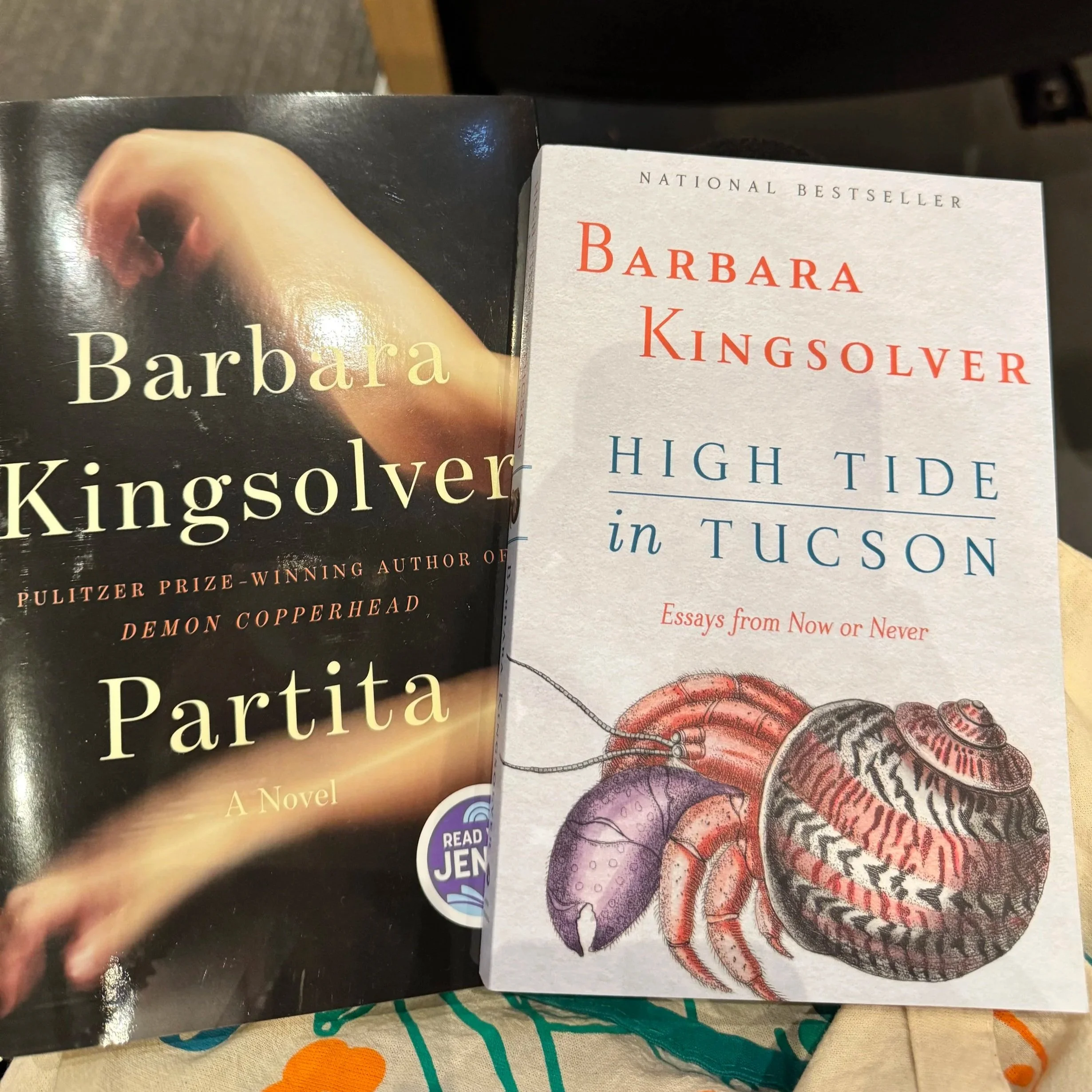
Partita
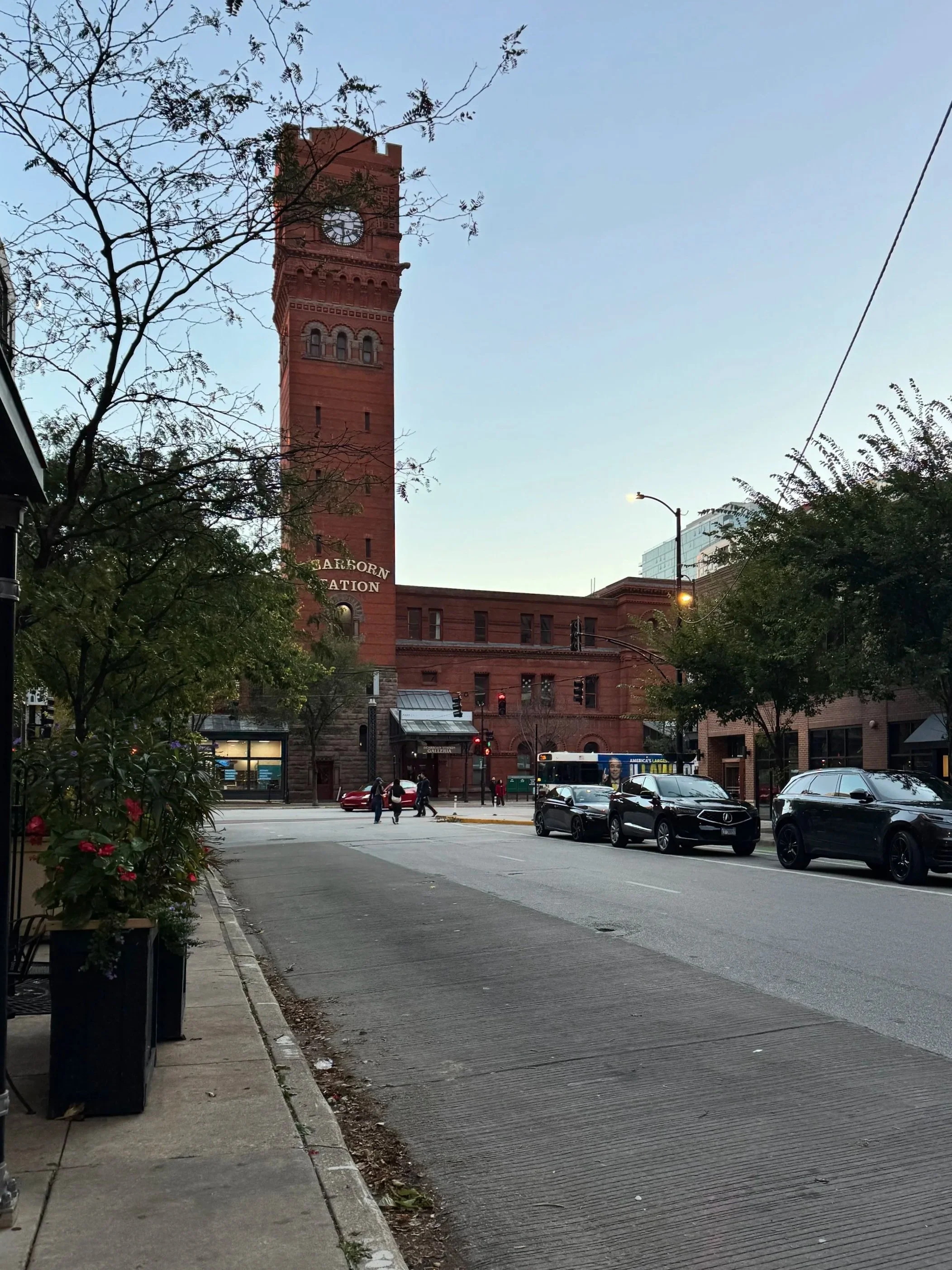
Did I take a pic of my bus as it sat waiting to turn onto Dearborn? Yes. Yes I did.
Yesterday evening I boarded the number 22 bus at Dearborn and Polk and rode it all the way up to Lincoln Park to see Barbara Kingsolver.
Her talk was a part of the Chicago Humanities Festival taking place this fall, the same festival that allowed me to see Marlon James last month (I am still working my way through the literary masterpiece that is The Disappearers) and Eric Idle a couple weeks ago. I wrote recently about how grateful I feel to have been surrounded by these moments.
On paper, leaving my family to go see Barbara Kingsolver in person felt slightly inopportune. But the universe sent me an assist; I learned about Barbara Kingsolver’s talk before I learned that my daughter’s high school was scheduling their homecoming for the same night, and that my son had two soccer games and also a high school open house to attend this weekend. I purchased my ticket for Kingsolver’s talk on August 23, the day before school began for my kids. I locked myself in before all the other family obligations presented themselves. I would have tossed and turned over the decision had the order of events been different.
And to see Barbara Kingsolver in person? What a moment for me. If you’ve read her books over the years, you have your own story for how she entered your world. For me it was a teacher in high school who handed me her copy of Hide Tide in Tucson: Essays from Now or Never and said that she thought I would like it. And I did. I loved those essays. My continued consumption of Barbara Kingsolver’s work was spurred on not only by my appreciation of her skillful writing but also by the fact that a teacher saw something in me that led her to pass me her copy of High Tide to begin with. It moved me, to be thought of that way.
I quickly devoured Kingsolver’s other earlier novels- Bean Trees, Pigs in Heaven, Animal Dreams, and Homeland and Other Stories in the year before The Poisonwood Bible came out (there is an old photograph somewhere- read: from the days of actual film photography- of me sitting on the beach of Lake Huron in one of those low-folding beach chairs, legs in the water and The Poisonwood Bible perched on my stomach. All the pages of my copy ended up warped from the water but I couldn’t set it down).
Several years later, the professor of my undergraduate creative nonfiction course-who also became a mentor of mine- had High Tide in Tucson on her course syllabus. That course sparked my love of creative nonfiction and solidified it as my genre. And as in high school, Hide Tide in Tucson was with me for the ride.
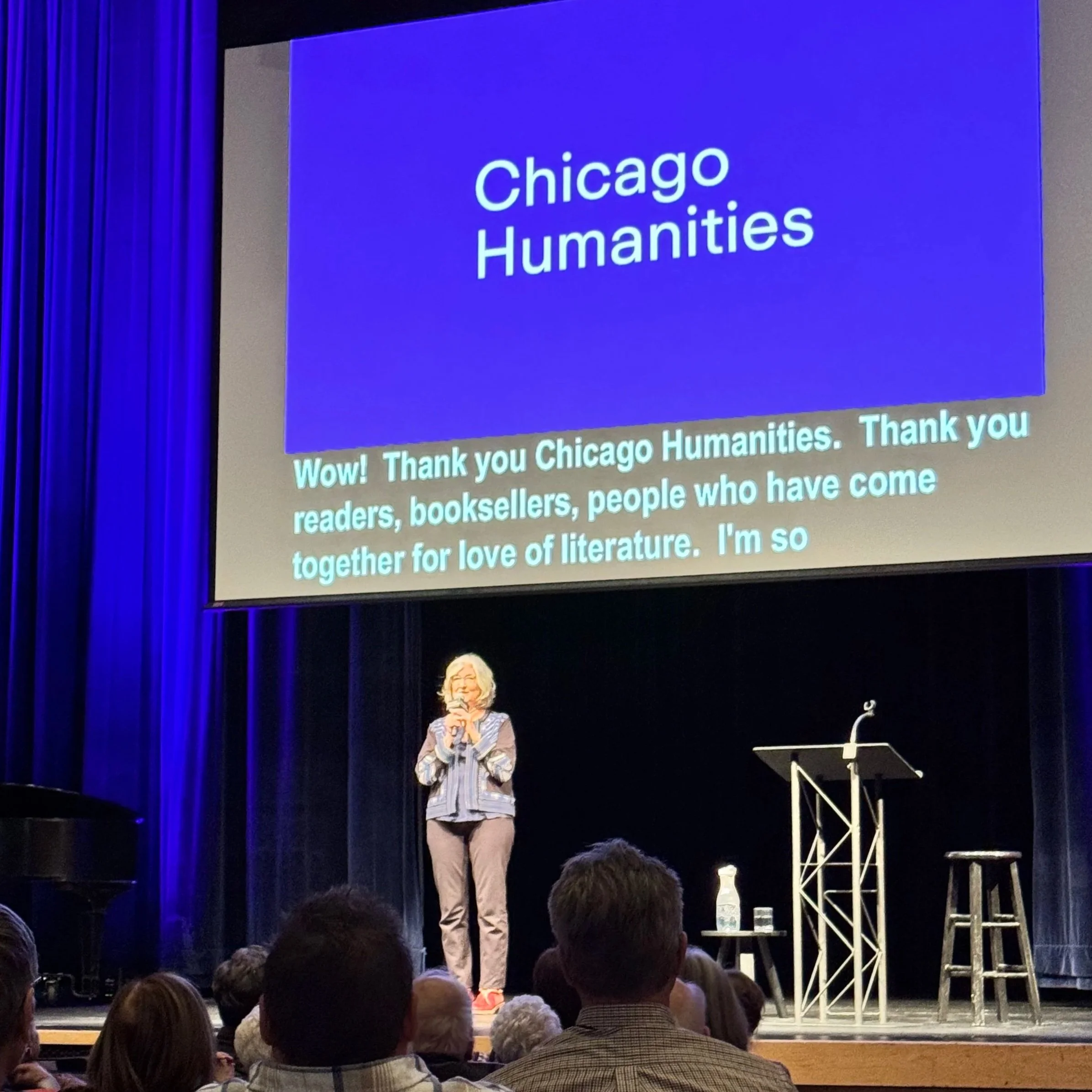
I write this now as I sit in the feelings of what it was like to see one of my heroes in person. I removed myself from my family for one night and dropped into the collective love and appreciation for Barbara Kingsolver in that sold out crowd. I passed through the hustle and bustle of the city on a Saturday night and was delivered into that lush space. The auditorium vibrated with good intention.
My heart also hums with a connection with Kingsolver through early parallel experiences. Last night, Barbara Kingsolver mentioned that she only had one creative writing class in college. Same with me. She majored in biology as an undergrad. Same with me. She even last night commented that one of her jobs was as a lab tech where she had to work on lab rabbits. And guess what? SAME (only for me it was rats. Please, PETA, I have changed my ways. I repent. I’m sure Barbara does too). I myself stained slides of parrafin-embedded sections of rat retina and stared at the masterpiece of those specialized layers of cells under a microscope. I wandered an old graveyard collecting cohort data for an ecology class and dredged up muck from the bottom of a creek. Physiology class brought it all back to the human self. The transport of ions across glomerular cell membranes in the kidneys sings like an orchestra. I heard it. Nature is art, and art is nature. Studying biology was like going to an all-you-can-take-in buffet of awe. Barbara Kingsolver’s writing allows me to go back to it again and again.
I had a lovely conversation with a woman next to me, and I shared how this world is so troubled right now, but also, here we were, surrounded by so much talent and art that we can lean in to in so many ways. There is so much goodness. As we stood to leave at the end, I wished the woman well. She told me to keep writing.
Look around you for these gifts. Ground yourself in this bounty of free expression. Find your center. The more we do this, the more we can have the types of conversations needed to turn this world around and to speak up for those who can’t.
At the beginning of Kingsolver’s newest book, Partita, is this epigraph:
“Sometimes you don’t survive whole, you just survive in part. But the grandeur of life is that attempt. ”
The book seller for the event not only supplied ticketholders with copies of Partita, but they also had a table of all her previous works. And so, with Barbara Kingsolver herself ensconced somewhere in the same building as me, I picked up my own copy of High Tide in Tucson.